
Your Kitchen Layout Matters More Than You Think
When most homeowners start thinking about a kitchen remodel, they jump straight to the fun stuff — countertop materials, cabinet colors, new appliances. But the single most impactful decision you'll make during a kitchen remodel has nothing to do with finishes. It's your layout.
The layout determines how you move through your kitchen, how much storage you actually have, whether two people can cook at the same time without colliding, and how the space connects to the rest of your home. In many Fort Lauderdale homes — especially those built in the 1970s through 1990s — the original kitchen layout was designed for a different era of living. Closed-off galley kitchens, awkward peninsula placements, and poor traffic flow are incredibly common.
If you're investing in a kitchen remodel, this is your chance to fix the bones of the room, not just the surfaces. Here's how to think about your kitchen layout and what options might work best for your home.
Why the Original Layout Might Not Work Anymore
Kitchens have changed dramatically over the past few decades. They've gone from being purely functional rooms tucked away from the rest of the house to being the center of daily life. You eat there, work there, help kids with homework there, and entertain there.
Many older homes in Fort Lauderdale and surrounding areas like Oakland Park, Wilton Manors, and Plantation were built with kitchens that don't reflect how families actually use the space today. Common issues include:
- Walls that block sightlines to the living or dining area, making the kitchen feel isolated
- Not enough counter space for meal prep, especially near the stove or sink
- Poor appliance placement that forces you to walk back and forth unnecessarily
- A lack of seating for casual meals or guests to gather while you cook
- Cramped walkways that make it hard for more than one person to be in the kitchen at a time
If any of these sound familiar, changing your layout — not just your finishes — should be part of the conversation with your remodeling contractor.
The Most Common Kitchen Layouts (and Who They Work For)
There's no single best kitchen layout. The right choice depends on the size and shape of your space, your household's habits, and your budget. Here are the most common options:
Galley Kitchen
Two parallel walls of counters and cabinets with a walkway in between. Galley kitchens are efficient for single cooks and work well in smaller Fort Lauderdale condos or townhomes where square footage is limited. The downside is that they can feel tight and don't offer much room for socializing.
L-Shaped Kitchen
Counters and cabinets run along two adjacent walls, forming an L. This layout opens up floor space and often allows room for a small dining table or island. It's one of the most versatile options and works well in mid-sized homes.
U-Shaped Kitchen
Counters wrap around three walls, giving you maximum storage and workspace. U-shaped kitchens are great for serious home cooks but can feel closed off if the room isn't large enough. Removing the upper cabinets on one side or adding a pass-through can help.
Kitchen With an Island
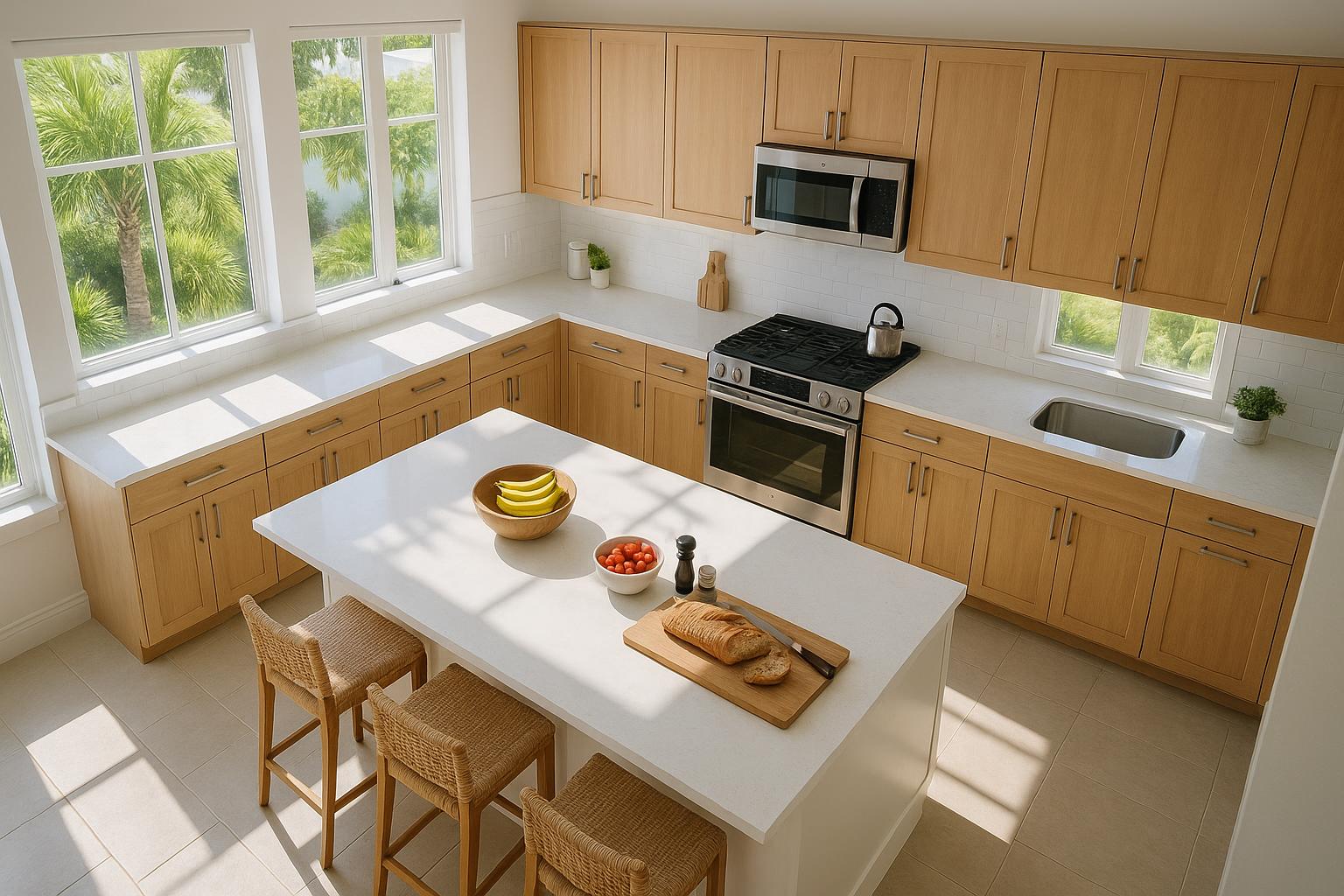
An island adds counter space, storage, and often seating. It works best in open-concept layouts where there's enough room for comfortable traffic flow around all sides — typically at least 36 to 42 inches of clearance. Many homeowners in Fort Lauderdale request an island during their remodel, and when the space supports it, it transforms how the kitchen functions.
Open-Concept Kitchen
This involves removing a wall (or part of one) to connect the kitchen to the living or dining area. It's one of the most popular layout changes we see in South Florida homes. Before committing, your contractor will need to determine whether the wall is load-bearing and what structural modifications are required.
How to Decide If You Should Change Your Layout
Not every kitchen remodel requires a layout change. If your kitchen already flows well and you just want updated surfaces, new cabinetry, and modern appliances, you can save money by keeping the existing footprint. Plumbing and electrical don't need to move, which reduces both cost and timeline.
But if you experience any of the following, a layout change is worth exploring:
- You constantly feel like you're running out of counter space. This often means the work triangle — the path between your sink, stove, and refrigerator — is poorly configured.
- You avoid cooking with other people in the room. If the kitchen can't comfortably hold two adults, the layout is working against you.
- Your kitchen feels disconnected from the rest of your home. Especially during gatherings, a closed-off kitchen can make the host feel isolated.
- You have dead zones. Corners with no functional use, awkward cabinet placements, or appliances that block walkways are signs the layout needs rethinking.
- You're already gutting the room. If you're replacing cabinets, flooring, and countertops anyway, the incremental cost of moving plumbing or removing a non-load-bearing wall may be well worth it.
What a Layout Change Involves
Changing a kitchen layout is more involved than a surface-level remodel, but it doesn't have to be overwhelming — especially with an experienced remodeling contractor managing the project. Here's what's typically involved:
- Design and planning: Your contractor will assess the existing structure, identify load-bearing walls, and map out plumbing and electrical lines before proposing a new layout.
- Permitting: In Fort Lauderdale, structural changes, electrical rerouting, and plumbing relocation require permits. A licensed contractor will handle this process for you.
- Demolition: Removing walls, old cabinets, and flooring to prepare for the new configuration.
- Rough-in work: Moving plumbing supply and drain lines, rerouting electrical circuits, and making any structural modifications.
- Rebuild and finishing: Installing new cabinets, countertops, flooring, fixtures, and appliances in the updated layout.
The entire process typically adds a few weeks to your project timeline compared to a same-layout remodel, but the difference in how the finished kitchen looks and functions is significant.
Start With an Honest Assessment
Before you fall in love with a specific cabinet style or countertop material, take a step back and honestly evaluate how your kitchen works — not just how it looks. Walk through your daily routine. Pay attention to where you feel frustrated, cramped, or inefficient. Those pain points are layout problems, and no amount of new tile or fresh paint will fix them.
If you're a homeowner in Fort Lauderdale, Pompano Beach, Lauderhill, or the surrounding area and you're considering a kitchen remodel, Archway Building Contractors can help you evaluate whether a layout change makes sense for your home and your budget. We handle everything from initial design through final walkthrough, so you get a kitchen that works as beautifully as it looks.